


Nestled in a remote area of Morocco and surrounded by Algeria’s Borders, Figuig is a unique and intriguing destination. Far away from big cities, the village of Figuig is a place where traditions and harmony reign.
However, it wasn’t always the case. Figuig has a bloody history, repulsing invaders non-stop for centuries. Today, it is one of the most fascinating places I’ve been to during my 30-day itinerary in Morocco. Let me share more insights, travel tips, and hacks about why you should visit Figuig in Morocco.
Nestled in a remote area of Morocco and surrounded by Algeria’s Borders, Figuig is a unique and intriguing destination. Far away from big cities, the village of Figuig is a place where traditions and harmony reign.
However, it wasn’t always the case. Figuig has a bloody history, repulsing invaders non-stop for centuries. Today, it is one of the most fascinating places I’ve been to during my 30-day itinerary in Morocco.
Let me share more insights, travel tips, and hacks about why you should visit Figuig in Morocco.
Exploration Map
ToggleWhy should you visit Figuig in Morocco?
There are not many places that surprised me, like Figuig, during my backpacking journey across Morocco. Originally not planning to go there, the idea came to me after an unexpected exchange with an old lady in Chefchaouen.
She was talking about a city called Figuig in Morocco, an ancient warrior tribe and an authentic Moroccan lifestyle, away from mass tourism. This was enough to convince me, and a week later, I was there. But why should you visit the Figuig Oasis?
I can promise that every day is a surprise when staying in the village of Figuig in Morocco. You discover something new, listen to forgotten stories, or meet with locals. No destination has been as unique as Figuig nor genuinely off the beaten path. This isn’t the easiest place to reach, but the rewards are worth every step. Are you coming?
There are not many places that surprised me, like Figuig, during my backpacking journey across Morocco. Originally not planning to go there, the idea came to me after an unexpected exchange with an old lady in Chefchaouen.
She was talking about a city called Figuig in Morocco, an ancient warrior tribe and an authentic Moroccan lifestyle, away from mass tourism. This was enough to convince me, and a week later, I was there. But why should you visit the Figuig Oasis?
I can promise that every day is a surprise when staying in the village of Figuig in Morocco. You discover something new, listen to forgotten stories, or meet with locals.
No destination has been as unique as Figuig nor genuinely off the beaten path. This isn’t the easiest place to reach, but the rewards are worth every step. Are you coming?
Where is Figuig located?
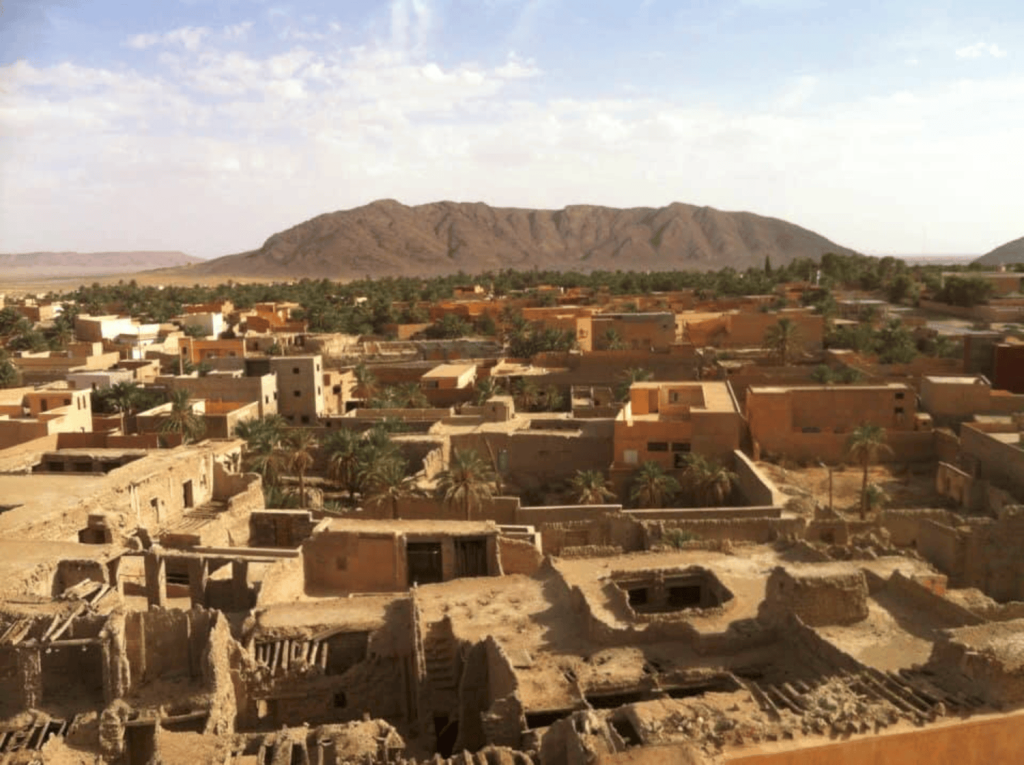
The Oasis of Figuig is located in the far east of Morocco, right next to the border with Algeria. Nestled in a particular geographical position in the Oriental side of Morocco, one of the most remote parts, reaching Figueig is a challenge.
Surrounded by landscapes that seem straight out of Mars, the village of Figuig is a hidden oasis at the edge of Morocco, isolated, peaceful, and rooted between desert and tradition. People have settled there because of its lush green oasis with date palm groves and natural water sources.
The nearest major city is Oujda, around 350 km to the north. Its position makes it one of the most unique and off-the-beaten-path destinations in Morocco. Figuig is far from famous tourist hubs like Marrakech or Fes, which explains why it has remained authentic, quiet, and largely untouched.
The Oasis of Figuig is located in the far east of Morocco, right next to the border with Algeria. Nestled in a particular geographical position in the Oriental side of Morocco, one of the most remote parts, reaching Figueig is a challenge.
Surrounded by landscapes that seem straight out of Mars, the village of Figuig is a hidden oasis at the edge of Morocco, isolated, peaceful, and rooted between desert and tradition. People have settled there because of its lush green oasis with date palm groves and natural water sources.
The nearest major city is Oujda, around 350 km to the north. Its position makes it one of the most unique and off-the-beaten-path destinations in Morocco.
Figuig is far from famous tourist hubs like Marrakech or Fes, which explains why it has remained authentic, quiet, and largely untouched.

Quick Info about Figuig
🌊 Figuig Oasis – Quick Facts
An off-the-beaten-path destination in Morocco near the Algerian border and the Sahara blending wild nature, breath-taking landscapes, strong Moroccan culture, and traditions.
- Region Oriental · East of Morocco
- Distance from Oujda 380 kilometres · 5 hours
- Distance from Fes 650 kilometres · 8 hours
- Known for Date harvest, palm groove, old traditons, history, Sahara
- Best time to visit October - April
- Budget range (per day) 25€ – 60€
- Vibe Relaxed · Authentic · Slow-paced
The village of Figuig offers a quiet and remote destination perfect for slow travellers and backpackers seeking culture, desert vibes, and authentic Moroccan traditions.


The Ultimate Travel Guide to Figuig
The best time to visit Figuig
Nestled near the border with Algeria and close to the Sahara, temperatures are hot most of the year, and some periods should be avoided to visit Figuig. From October to the end of April, temperatures are cooler, and provide enjoyable weather for wandering around.
Despite being an off-the-beaten-path destination, there is still a slight touristy interest in Figuig. Most travellers come between December and February. This is when the weather is ideal for exploring the desert. If you want to go during the low season, avoid these months.
But, if it’s not a problem, note that December, January, and February are also the months where dates are harvested. If you have never tried fresh dates, this will blow your mind. It is tasty and has nothing to do with the one you can buy at home.
Then, from May to August, temperatures are too hot in Figuig due to its proximity to the Sahara in eastern Morocco. Although the Figuig Oasis offers shade and wind, the weather is not bearable for foreigners. Therefore, the best months to visit Figuig are from October to April.
Best time to visit Figuig: October – end of April
Nestled near the border with Algeria and close to the Sahara, temperatures are hot most of the year, and some periods should be avoided to visit Figuig.
From October to the end of April, temperatures are cooler, and provide enjoyable weather for wandering around.
Despite being an off-the-beaten-path destination, there is still a slight touristy interest in Figuig. Most travellers come between December and February.
This is when the weather is ideal for exploring the desert. If you want to go during the low season, avoid these months.
But, if it’s not a problem, note that December, January, and February are also the months where dates are harvested. If you have never tried fresh dates, this will blow your mind. It is tasty and has nothing to do with the one you can buy at home.
Then, from May to August, temperatures are too hot in Figuig due to its proximity to the Sahara in eastern Morocco. Although the Figuig Oasis offers shade and wind, the weather is not bearable for foreigners. Therefore, the best months to visit Figuig are from October to April.
Best time to visit Figuig: October – end of April

Where to Stay in the Oasis of Figuig?
During my stay in Figuig, Morocco, I stayed at Auberge Oasis, a locally run property. It seemed to be almost the only available choice in April inside the Zenaga neighbourhood. But, for around 150 MAD per night, I had a private room and bathroom.
It was a comfortable and affordable choice. The whole Dar was surprising, full of decorations and memories from the owners. I felt like entering a traditional Moroccan house; I was more than welcome. They cook meals directly at the Auberge, delicious, and worth the price.
There, I met Ibrahim, a generous and kind local who showed me around and introduced me to his friends. We spent hours playing Rami card games at a café, and his genuine hospitality and kindness left a lasting impression on me.
Where to stay in Figuig: Auberge Oasis
Price per person/night at Auberge Oasis: 150/200 MAD
During my stay in Figuig, Morocco, I stayed at Auberge Oasis, a locally run property. It seemed to be almost the only available choice in April inside the Zenaga neighbourhood. But, for around 150 MAD per night, I had a private room and bathroom.
It was a comfortable and affordable choice. The whole Dar was surprising, full of decorations and memories from the owners.
I felt like entering a traditional Moroccan house; I was more than welcome. They cook meals directly at the Auberge, delicious, and worth the price.
There, I met Ibrahim, a generous and kind local who showed me around and introduced me to his friends. We spent hours playing Rami card games at a café, and his genuine hospitality and kindness left a lasting impression on me.
Where to stay in Figuig: Auberge Oasis
Price per person/night at Auberge Oasis: 150/200 MAD

How to reach the village of Figuig?
From Fès to Figuig
Fés to Figuig by Car: 8 hours, 650 kilometres
Fés to Figuig by Bus: 17-20 hours, 300-350 MAD
The journey from Fès to Figuig takes 17-20 hours by bus, depending on your connections and luck. First, book a bus to Errachidia. Regardless of your starting point, Errachidia is a mandatory stop if you ever want to reach Figuig.
I booked a bus with CTM for €18, an 8-hour ride. Arriving in Errachidia at 4 AM (ouch!)I luckily found a quick connection to Bouarfa for €7 and another 5 hours. After witnessing a beautiful sunrise on the road, our driver dropped us off in Bouarfa, where buses head to Figuig. They cost €7 and last for 3 hours.
Overall, it was a 17-hour journey from Fès to Figuig, costing €31. Getting to Figuig by bus might not be the easiest task, but trust me, it’s worth the effort, making it one of the best Slow Travel destinations. But, to do so, it is mandatory to learn how to travel around Morocco by public transportation.
You can also travel by car from Fes to Figuig. The journey is obviously shorter, and it gives you more opportunities to stop whenever you want.
Bus Companies in Morocco to reach Figuig: CTM or Supratours
Fés to Figuig by Car: 8 hours, 650 kilometres
Fés to Figuig by Bus: 17-20 hours, 300-350 MAD
The journey from Fès to Figuig takes 17-20 hours by bus, depending on your connections and luck. First, book a bus to Errachidia. Regardless of your starting point, Errachidia is a mandatory stop if you ever want to reach Figuig.
I booked a bus with CTM for €18, an 8-hour ride. Arriving in Errachidia at 4 AM (ouch!)I luckily found a quick connection to Bouarfa for €7 and another 5 hours.
After witnessing a beautiful sunrise on the road, our driver dropped us off in Bouarfa, where buses head to Figuig. They cost €7 and last for 3 hours.
Overall, it was a 17-hour journey from Fès to Figuig, costing €31. Getting to Figuig by bus might not be the easiest task, but trust me, it’s worth the effort, making it one of the best Slow Travel destinations.
But, to do so, it is mandatory to learn how to travel around Morocco by public transportation.
You can also travel by car from Fes to Figuig. The journey is obviously shorter, and it gives you more opportunities to stop whenever you want.
Bus Companies in Morocco to reach Figuig: CTM or Supratours
From Oujda to Figuig
Oujda to Figuig by Car: 5 hours, 380 kilometres
Oujda to Figuig by Bus: 8-9 hours, 150-200 MAD
The second option is driving from Oujda, one of the main cities in northern Morocco, to Figuig. The road is shorter compared to the one starting in Fes. Plus, it gives you a chance to explore one of the most unknown Moroccan cities: Oujda.
From there, two options unfold: you can either take local buses to Bouarfa and then another from Bouarfa to Figuig, or simply drive all the way to Figuig. I didn’t take this route, but I have met many locals who went or often go to Oujda to study or live. They gave me an estimated price and duration of what it would cost.
Oujda to Figuig by Car: 5 hours, 380 kilometres
Oujda to Figuig by Bus: 8-9 hours, 150-200 MAD
The second option is driving from Oujda, one of the main cities in northern Morocco, to Figuig. The road is shorter compared to the one starting in Fes.
Plus, it gives you a chance to explore one of the most unknown Moroccan cities: Oujda.
From there, two options unfold: you can either take local buses to Bouarfa and then another from Bouarfa to Figuig, or simply drive all the way to Figuig.
I didn’t take this route, but I have met many locals who went or often go to Oujda to study or live. They gave me an estimated price and duration of what it would cost.

The Oriental Desert Express Train: An Unforgettable Experience
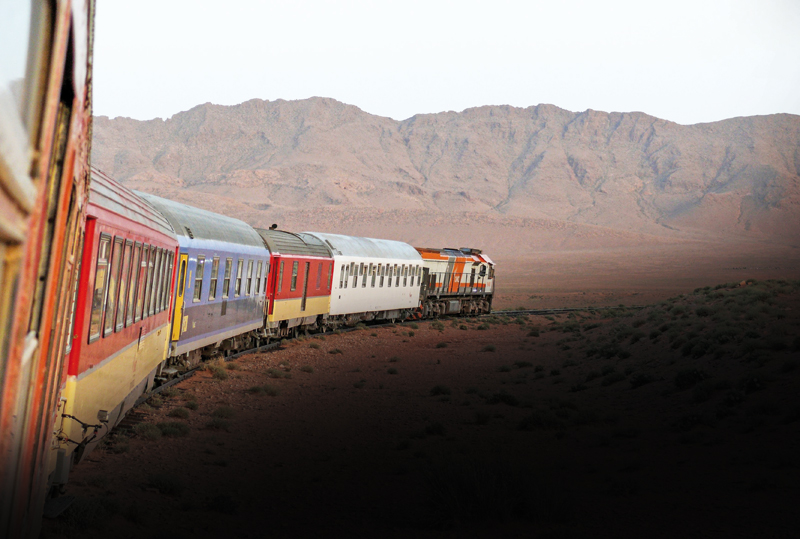
For those looking for a different experience in Morocco, you can board the majestic Oriental Desert Express between Oujda and the Oasis of Figuig. The train goes from Bouarfa to Oujda and offers an off-the-beaten-path travel experience.
Born from the mind of a Swiss living in Morocco, it is a tourist train carrying minerals and moving twice a week. It uses the rails of the unachieved Mediterranean-Niger project built during the 20s’/30s’.
Nowadays, it is a gastronomic and immersive experience with the train going quite slowly (around 60 kilometres per hour), leaving you time to enjoy the landscapes.
You also stop to interact with Berber tribes along the way. In total, the journey takes between 8 and 12 hours, and it is a spectacular way to visit Morocco.
For those looking for a different experience in Morocco, you can board the majestic Oriental Desert Express between Oujda and the Oasis of Figuig. The train goes from Bouarfa to Oujda and offers an off-the-beaten-path travel experience.
Born from the mind of a Swiss living in Morocco, it is a tourist train carrying minerals and moving twice a week. It uses the rails of the unachieved Mediterranean-Niger project built during the 20s’/30s’.
Nowadays, it is a gastronomic and immersive experience with the train going quite slowly (around 60 kilometres per hour), leaving you time to enjoy the landscapes. You also stop to interact with Berber tribes along the way. In total, the journey takes between 8 and 12 hours, and it is a spectacular way to visit Morocco.
How to get around the Oasis of Figuig?
The village of Figuig isn’t a big place, as its name indicates. It spreads around 200 square kilometres and is composed of 7 different ksour, the name given to fortified villages with Berber architecture.
Most of the neighbourhood is within walking distance, the farthest being the Zenaga one, located approximately 30 minutes from the centre. However, the walk is worth it as it offers a breathtaking view over the Oasis of Figuig.
But, if you don’t feel like walking, there is a bus going from the main square of Zenage to the upper part of Figuig. It costs a few dirhams and lasts for 5-10 minutes. Locals alternate between these two options, and both are a great way to visit the village of Figuig.
The village of Figuig isn’t a big place, as its name indicates. It spreads around 200 square kilometres and is composed of 7 different ksour, the name given to fortified villages with Berber architecture.
Most of the neighbourhood is within walking distance, the farthest being the Zenaga one, located approximately 30 minutes from the centre. However, the walk is worth it as it offers a breathtaking view over the Oasis of Figuig.
But, if you don’t feel like walking, there is a bus going from the main square of Zenage to the upper part of Figuig. It costs a few dirhams and lasts for 5-10 minutes. Locals alternate between these two options, and both are a great way to visit the village of Figuig.

Budget: How much does it cost to stay in Figuig?
The Figuig province isn’t the most expensive place in Morocco, far from it! Most locals grow their own vegetables and fruits. You can buy them for low prices at the local market held in Zenaga twice a week.
Below is a detailed table on how much it costs to stay in Figuig per day. I made it based on my travel style, which includes consuming local foods and immersing in free or cheap activities. Therefore, use it as a base and adjust it according to your travel style and needs.
The Figuig province isn’t the most expensive place in Morocco, far from it! Most locals grow their own vegetables and fruits. You can buy them for low prices at the local market held in Zenaga twice a week.
Below is a detailed table on how much it costs to stay in Figuig per day. I made it based on my travel style, which includes consuming local foods and immersing in free or cheap activities. Therefore, use it as a base and adjust it according to your travel style and needs.
💰 Budget per day in Figuig
A realistic daily budget for a slow and authentic experience in Figuig.
- Accommodation15€ – 30€
- Transportation0€ – 5€
- Food10€ – 25€
- Drinks5€ – 10€
- Activities0€ – 15€
- Souvenirs0€ – 5€
💡 Figuig is one of the most affordable destinations in Morocco. Costs stay low thanks to local food, walkable distances, and simple accommodations.
Best Things to Do in Figuig
How do you spend time in one of the most intriguing Moroccan villages? In Figuig, the words “discovery” and “exploration” take on their full meaning. This unique oasis setting is a haven for slow travellers eager to wander and immerse themselves in its charm.
During my stay, I had time to discover the best things to do in Figuig, and some hidden gems guided by locals. If you want to make the most of your visit to Figuig, I encourage you not only to read what follows but also to lose yourself and let curiosity be your compass. At this moment, magic happens.
How do you spend time in one of the most intriguing Moroccan villages? In Figuig, the words “discovery” and “exploration” take on their full meaning.
This unique oasis setting is a haven for slow travellers eager to wander and immerse themselves in its charm.
During my stay, I had time to discover the best things to do in Figuig, and some hidden gems guided by locals. If you want to make the most of your visit to Figuig, I encourage you not only to read what follows but also to lose yourself and let curiosity be your compass. At this moment, magic happens.
Explore Figuig’s Ksars & Historical Sites
The village of Figuig has a fascinating history engraved in different buildings and historical sites. Composed of seven Ksour, with Zenaga being the biggest, exploring each of them was one of my top things to do in Figuig to immerse myself in the local atmosphere and unveil its wonders.
Besides your exploration throughout the different neighbourhoods, you can also add some key points to your Figuig itinerary. Start by witnessing Qsr aljwabr, Qsr awlad mhrz, Qsr l bydat ayt alnj, and Bhbwht.
Each site tells a story, showcasing the mysteries of history, architecture, and the cultural tapestry of this Moroccan oasis town through its ruins and historical landmarks. I’ve been stunned by how majestic they look.
The village of Figuig has a fascinating history engraved in different buildings and historical sites. Composed of seven Ksour, with Zenaga being the biggest, exploring each of them was one of my top things to do in Figuig to immerse myself in the local atmosphere and unveil its wonders.
Besides your exploration throughout the different neighbourhoods, you can also add some key points to your Figuig itinerary. Start by witnessing Qsr aljwabr, Qsr awlad mhrz, Qsr l bydat ayt alnj, and Bhbwht.
Each site tells a story, showcasing the mysteries of history, architecture, and the cultural tapestry of this Moroccan oasis town through its ruins and historical landmarks. I’ve been stunned by how majestic they look.

Lose Yourself in the Palm Grove
My favourite highlight of visiting Figuig is surely to lose myself in the giant palm grove. You can spend hours wandering through this natural maze of sustainable walls and captivating landscapes around.
This peaceful environment, surrounded by countless palm trees, is perfect for enjoying the present moment and finding peace of mind. If you follow the meaning of travelling slowly, just look up and observe the wind weaving date palms in a hypnotic way.
But be cautious, it is vast, and you wouldn’t want to get lost. Stretching over 12 square kilometres, it’s easy to lose your path. Don’t hesitate to ask locals for directions. In Figuig, you are far away from the scams you can find in big Moroccan cities.
My favourite highlight of visiting Figuig is surely to lose myself in the giant palm grove. You can spend hours wandering through this natural maze of sustainable walls and captivating landscapes around.
This peaceful environment, surrounded by countless palm trees, is perfect for enjoying the present moment and finding peace of mind.
If you follow the meaning of travelling slowly, just look up and observe the wind weaving date palms in a hypnotic way.
But be cautious, it is vast, and you wouldn’t want to get lost. Stretching over 12 square kilometres, it’s easy to lose your path. Don’t hesitate to ask locals for directions. In Figuig, you are far away from the scams you can find in big Moroccan cities.

Learn about the Katthara Irrigation System
The Oasis of Figuig is home to one of the most ingenious irrigation systems I’ve seen. Called Katthara, the whole infrastructure is made of hundreds of canals and pools criss-crossing the Zenaga neighbourhood.
During my journey, I had the chance to meet Ahmed, the Assrayfie or one of the Watermakers of Figuig. He explained to me that his deep understanding, passed down through generations, helped him to meticulously measure and distribute water using the unique unit, “Takhroubt.”
Each family relies on the expertise of an Assfyrie to fill their pool, ensuring that 20 to 30 people can sustain their lives amidst the arid conditions. Today, the irrigation system in Figuig is a great example of how locals live in perfect harmony with their environment. Figuig even has some underground pools where locals sometimes go. Don’t be shy and ask them for tips on how to visit one.
The Oasis of Figuig is home to one of the most ingenious irrigation systems I’ve seen. Called Katthara, the whole infrastructure is made of hundreds of canals and pools criss-crossing the Zenaga neighbourhood.
During my journey, I had the chance to meet Ahmed, the Assrayfie or one of the Watermakers of Figuig. He explained to me that his deep understanding, passed down through generations, helped him to meticulously measure and distribute water using the unique unit, “Takhroubt.”
Each family relies on the expertise of an Assfyrie to fill their pool, ensuring that 20 to 30 people can sustain their lives amidst the arid conditions.
Today, the irrigation system in Figuig is a great example of how locals live in perfect harmony with their environment. Figuig even has some underground pools where locals sometimes go. Don’t be shy and ask them for tips on how to visit one.

Go to the Public Bath
One of the main traditions in Morocco is going to the public bath and or sauna weekly. It traces back to ancient history, when most houses didn’t have a private shower. Today, it is the perfect way to immerse oneself in the culture of Figuig.
After a hard day exploring around, heading to one of the public baths to freshen up is the right thing to do. But a warning here! There are separate baths for men and women, so be sure to go to the correct one!
These baths are free and open to locals and visitors, offering a great opportunity to relax and connect to locals in a stress-free, convivial setting. It is one of my top things to do in Figuig, and I went there almost daily.
One of the main traditions in Morocco is going to the public bath and or sauna weekly. It traces back to ancient history, when most houses didn’t have a private shower. Today, it is the perfect way to immerse oneself in the culture of Figuig.
After a hard day exploring around, heading to one of the public baths to freshen up is the right thing to do. But a warning here! There are separate baths for men and women, so be sure to go to the correct one!
These baths are free and open to locals and visitors, offering a great opportunity to relax and connect to locals in a stress-free, convivial setting. It is one of my top things to do in Figuig, and I went there almost daily.

Harvest Dates
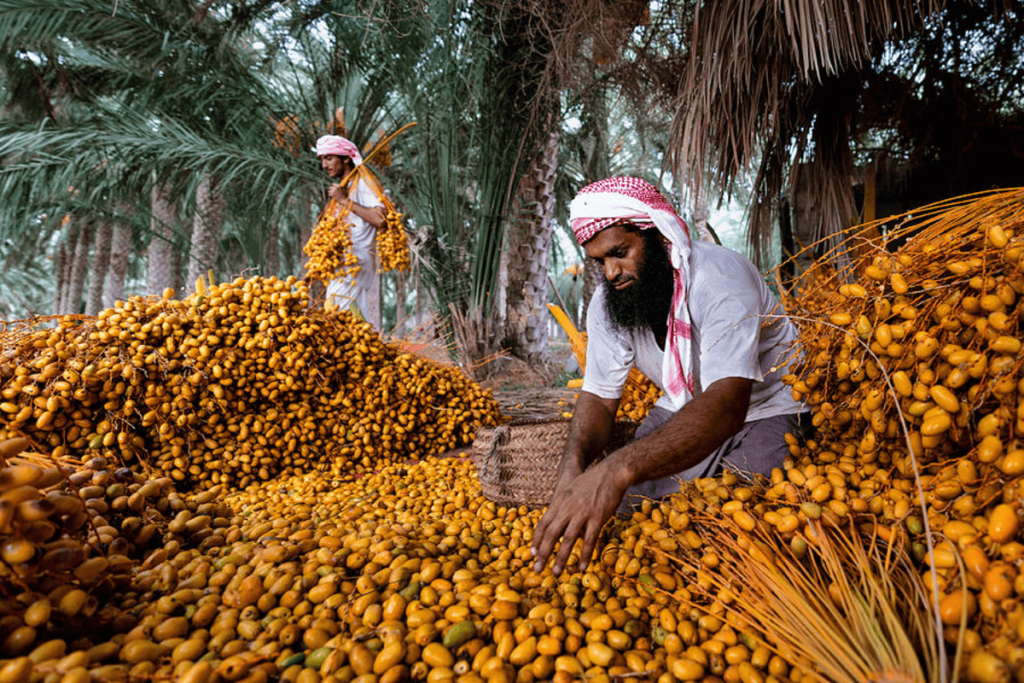
One of the surprises in Figuig is its exceptional date production. From late summer to early autumn, September to the end of November, the harvest season is in full swing. The numerous palm trees blossom and deliver exceptional fruits during this time.
If you have never witnessed the date harvest or simply try fresh dates, this is an opportunity not to miss in Figuig. Locals are eager to share their knowledge as it represents a big part of the local economy during this time of the year.
You can join them in harvesting as they show you the different methods they use (palm trees being slightly higher than tomato plants). It is a unique chance to immerse and learn about the region’s agricultural heritage and experience an authentic side of Moroccan culture in the Oasis of Figuig.
One of the surprises in Figuig is its exceptional date production. From late summer to early autumn, September to the end of November, the harvest season is in full swing. The numerous palm trees blossom and deliver exceptional fruits during this time.
If you have never witnessed the date harvest or simply try fresh dates, this is an opportunity not to miss in Figuig. Locals are eager to share their knowledge as it represents a big part of the local economy during this time of the year.
You can join them in harvesting as they show you the different methods they use (palm trees being slightly higher than tomato plants).
It is a unique chance to immerse and learn about the region’s agricultural heritage and experience an authentic side of Moroccan culture in the Oasis of Figuig.
Hike to View Points
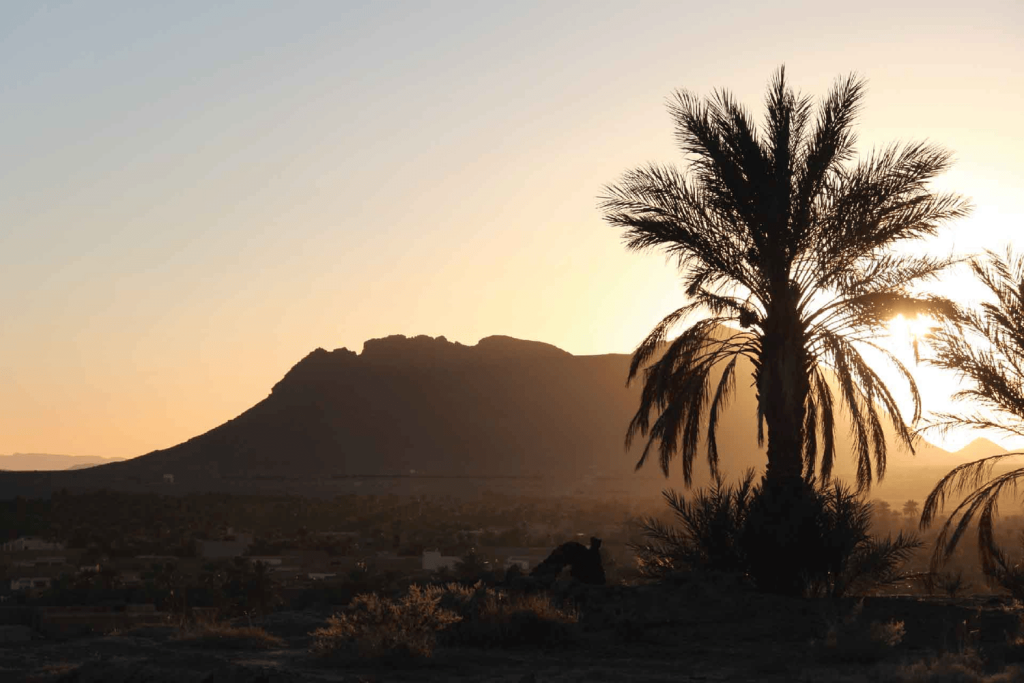
You will probably pass by during your exploration of the Figuig Oasis or lose yourself in the palm grove, but just in case, there are some viewpoints you should not miss. They offer breathtaking views over the Zenage neighbourhood, allowing you to contemplate the off-the-beaten-path destination in Morocco where you are staying.
Once there, just sit down and observe the beauty of this hidden oasis in Morocco. I was going there for sunset, either alone or with locals, but ended up fascinated each time. If you don’t know where they are, simply ask around. The people in Figuig know better.
You will probably pass by during your exploration of the Figuig Oasis or lose yourself in the palm grove, but just in case, there are some viewpoints you should not miss.
They offer breathtaking views over the Zenage neighbourhood, allowing you to contemplate the off-the-beaten-path destination in Morocco where you are staying.
Once there, just sit down and observe the beauty of this hidden oasis in Morocco. I was going there for sunset, either alone or with locals, but ended up fascinated each time. If you don’t know where they are, simply ask around. The people in Figuig know better.

Embrace the Local Culture
Lastly, embrace the local culture of Figuig in Morocco by chatting with the residents, learning about Figuig’s heritage, or simply enjoying a coffee while playing rami at a café. This is the best way to explore a new place.
The opportunities for exploration and learning are endless. Figuig’s inhabitants are welcoming and eager to share their knowledge and history, especially with curious visitors. So, arm yourself with a bright smile, a sprinkle of curiosity, and a genuine desire to understand this hidden Moroccan gem.
Lastly, embrace the local culture of Figuig in Morocco by chatting with the residents, learning about Figuig’s heritage, or simply enjoying a coffee while playing rami at a café. This is the best way to explore a new place.
The opportunities for exploration and learning are endless. Figuig’s inhabitants are welcoming and eager to share their knowledge and history, especially with curious visitors.
So, arm yourself with a bright smile, a sprinkle of curiosity, and a genuine desire to understand this hidden Moroccan gem.

Best Things to do Around Figuig
Hike the Mountains
Although in a flat environment, there are some short hikes to do around Figuig. After a few days in the village of Figuig, I wanted to explore the surroundings and spotted a viewpoint that seemed cool on Google Maps.
The Platean Ketchine is roughly one hour away from the Zenage neighbourhood and isn’t difficult to reach. The only thing to anticipate is the water supply, as it tends to be hot in Figuig, and there are no water sources around.
Nature is king in Figuig. Once on top, take a moment to immerse yourself in the beauty and enjoy a 360-degree view. Plan some snacks, and then go back to Figuig for the evening, as I advise you to go there for sunset.
Where: plateau kechtine
Although in a flat environment, there are some short hikes to do around Figuig. After a few days in the village of Figuig, I wanted to explore the surroundings and spotted a viewpoint that seemed cool on Google Maps.
The Platean Ketchine is roughly one hour away from the Zenage neighbourhood and isn’t difficult to reach. The only thing to anticipate is the water supply, as it tends to be hot in Figuig, and there are no water sources around.
Nature is king in Figuig. Once on top, take a moment to immerse yourself in the beauty and enjoy a 360-degree view. Plan some snacks, and then go back to Figuig for the evening, as I advise you to go there for sunset.
Where: plateau kechtine
Walk in the Desert
One cannot visit Figuig without trying to experience the desert. Far from the common imagination where sand dunes spread as far as the eye can see, the desert around Figuig is different.
Mostly composed of arid and rocky landscapes, it offers an alternative for those who want to discover this unique ecosystem far from the crowds. You need to be prepared, at least a bit, to walk there. The constant scorching sun and heavy heat can hit you hard.
But this is one of the best things to do around Figuig. The silence of the desert, coupled with landscapes straight out of Mars, paints an unforgettable moment. There are guides offering their services in the oasis of Figuig. Do not go alone, as it is dangerous. Ask knowledgeable locals to join you on this odyssey.
One cannot visit Figuig without trying to experience the desert. Far from the common imagination where sand dunes spread as far as the eye can see, the desert around Figuig is different.
Mostly composed of arid and rocky landscapes, it offers an alternative for those who want to discover this unique ecosystem far from the crowds. You need to be prepared, at least a bit, to walk there. The constant scorching sun and heavy heat can hit you hard.
But this is one of the best things to do around Figuig. The silence of the desert, coupled with landscapes straight out of Mars, paints an unforgettable moment.
There are guides offering their services in the oasis of Figuig. Do not go alone, as it is dangerous. Ask knowledgeable locals to join you on this odyssey.
Figuig’s Village History
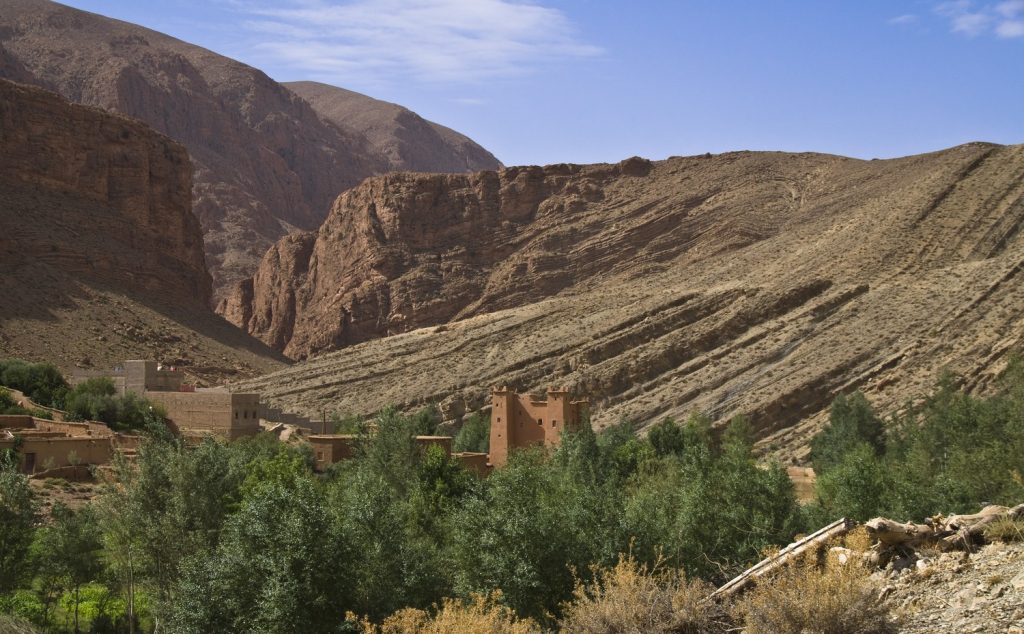
Lost in the middle of desert landscapes that look like Mars, Figuig has a captivating history to share. In this curious place, it is like time has paused. The inhabitants of Figuig live peaceful, slow-paced lives in harmony with nature.
The whole scene makes this off-the-beaten-path destination perfect for slow travel exploration. However, life in Figuig hasn’t always been easy, and many challenges and battles have shaped this small paradise.
Come with me for a quick overview of the Figuig Oasis and what it has been through to become the heritage we know today. Ready?
Lost in the middle of desert landscapes that look like Mars, Figuig has a captivating history to share. In this curious place, it is like time has paused. The inhabitants of Figuig live peaceful, slow-paced lives in harmony with nature.
The whole scene makes this off-the-beaten-path destination perfect for slow travel exploration. However, life in Figuig hasn’t always been easy, and many challenges and battles have shaped this small paradise.
Come with me for a quick overview of the Figuig Oasis and what it has been through to become the heritage we know today. Ready?
The Oasis of Figuig: A central destination in Morocco
Back then, Figuig in Morocco was a vital stop for travellers and traders. Being an oasis of countless date palm trees, blessed with an abundant water supply, and located on the Saharan trade route, Figuig quickly became an ideal resting point for traders crossing the harsh desert.
Over time, agriculture flourished here, driving demographic growth. However, the town faced significant economic challenges, especially after the nearby Algerian border closed in 1994, cutting off a major economic lifeline.
Back then, Figuig in Morocco was a vital stop for travellers and traders. Being an oasis of countless date palm trees, blessed with an abundant water supply, and located on the Saharan trade route, Figuig quickly became an ideal resting point for traders crossing the harsh desert.
Over time, agriculture flourished here, driving demographic growth. However, the town faced significant economic challenges, especially after the nearby Algerian border closed in 1994, cutting off a major economic lifeline.

The Zenaga Neighbourhood: A Conflict Zone
Conflicts and battles became common, particularly in the ksar Zenaga neighbourhood. This large and beautiful area, with access to the most water, was frequently targeted.
Indeed, whoever controlled Zenaga was provided with strategic advantages due to its vital gardens, which were primary sources of food and income.
Flights and local wars fuelled by this primary and strategic desire were blown during the years. However, it was without taking into account the pride and ferocity of the Zenaga people. They were ready to defend their due and heritage at any cost.
Conflicts and battles became common, particularly in the ksar Zenaga neighbourhood. This large and beautiful area, with access to the most water, was frequently targeted.
Indeed, whoever controlled Zenaga was provided with strategic advantages due to its vital gardens, which were primary sources of food and income.
Flights and local wars fuelled by this primary and strategic desire were blown during the years. However, it was without taking into account the pride and ferocity of the Zenaga people. They were ready to defend their due and heritage at any cost.
Figuig’s Inhabitants Challenges and Fights
Therefore, to protect themselves, the inhabitants, mostly warriors and farmers, built strong defensive walls around their ksour or ksar (fortified villages).
These walls were not just physical barriers but showed symbols of the community’s resilience and determination to defend their way of life (source: here).
But the early 20th century brought dramatic changes for the inhabitants of Figuig in Morocco. In 1903, French colonial forces bombarded the town as part of their efforts to secure entry into Morocco from Algeria (source: here).
This military action severely disrupted local communities, including Zenaga. Overall, the bombardment was a psychological blow, but the residents mustered all their strength to endure and rebuild.
Therefore, to protect themselves, the inhabitants, mostly warriors and farmers, built strong defensive walls around their ksour or ksar (fortified villages).
These walls were not just physical barriers but showed symbols of the community’s resilience and determination to defend their way of life (source: here).
But the early 20th century brought dramatic changes for the inhabitants of Figuig in Morocco. In 1903, French colonial forces bombarded the town as part of their efforts to secure entry into Morocco from Algeria (source: here).
This military action severely disrupted local communities, including Zenaga. Overall, the bombardment was a psychological blow, but the residents mustered all their strength to endure and rebuild.

The province of Figuig today
Despite these challenges, the people of Zenaga, representing 50% of Figuig’s inhabitants, showed remarkable resilience. They adapted, rebuilt, and preserved their rich cultural heritage, making Figuig stand today with resilience and legacy.
Nowadays, it is a place that represents Moroccan integrity and culture. These people take huge pride in their heritage and background. If you want to experience an authentic slow travel destination in Morocco and learn about what makes this country unique, you should visit Figuig.
However, far from being spared from all damages, the village of Figuig is facing new challenges. Its inhabitants are fighting again, against a different opponent.
Its water supply is once again threatened by corporations that want to take over the water control and impose taxes on it, clearly going against the Assyrie tradition and Zenaga independence (source: here).
Despite these challenges, the people of Zenaga, representing 50% of Figuig’s inhabitants, showed remarkable resilience. They adapted, rebuilt, and preserved their rich cultural heritage, making Figuig stand today with resilience and legacy.
Nowadays, it is a place that represents Moroccan integrity and culture. These people take huge pride in their heritage and background.
If you want to experience an authentic slow travel destination in Morocco and learn about what makes this country unique, you should visit Figuig.
However, far from being spared from all damages, the village of Figuig is facing new challenges. Its inhabitants are fighting again, against a different opponent.
Its water supply is once again threatened by corporations that want to take over the water control and impose taxes on it, clearly going against the Assyrie tradition and Zenaga independence (source: here).

Where to go after Figuig?
However, your journey in Morocco doesn’t have to stop in Figuig, my friend. This country has plenty of destinations to explore, some less-known and others more famous. Located in a remote area, it takes some time to travel between the Figuig oasis and other places, but remember that it is also part of your odyssey.
However, your journey in Morocco doesn’t have to stop in Figuig, my friend. This country has plenty of destinations to explore, some less-known and others more famous.
Located in a remote area, it takes some time to travel between the Figuig oasis and other places, but remember that it is also part of your odyssey.
Fes
Fes is one of the most magical and atypical places I’ve been to in Morocco. Its energy and atmosphere surprised me in a way I couldn’t expect, and I didn’t find something similar elsewhere in the country.
Going to Fes for Figuig is quite an adventure, but it is also an opportunity to dive into the local public transportation system and learn more about the Moroccan people. Once in Fes, let the city’s magic and your curiosity guide your steps.
Between the UNESCO World Heritage Medina, the craftsmanship history and knowledge, or the diverse attractions around, you have a ton of reasons to visit Fes after Figuig. To learn more about this destination in Morocco, check out this detailed travel guide I crafted below.
👉 Read the complete Fes itinerary (where to sleep, things to do, and travel tips) here
Distance from Figuig by Car: 8 hours, 650 kilometres
Distance from Figuig by Bus: 17-20 hours, 300-350 MAD
Fes is one of the most magical and atypical places I’ve been to in Morocco. Its energy and atmosphere surprised me in a way I couldn’t expect, and I didn’t find something similar elsewhere in the country.
Going to Fes for Figuig is quite an adventure, but it is also an opportunity to dive into the local public transportation system and learn more about the Moroccan people. Once in Fes, let the city’s magic and your curiosity guide your steps.
Between the UNESCO World Heritage Medina, the craftsmanship history and knowledge, or the diverse attractions around, you have a ton of reasons to visit Fes after Figuig.
To learn more about this destination in Morocco, check out this detailed travel guide I crafted below.
👉 Read the complete Fes itinerary (where to sleep, things to do, and travel tips) here
Distance from Figuig by Car: 8 hours, 650 kilometres
Distance from Figuig by Bus: 17-20 hours, 300-350 MAD

Tinghir
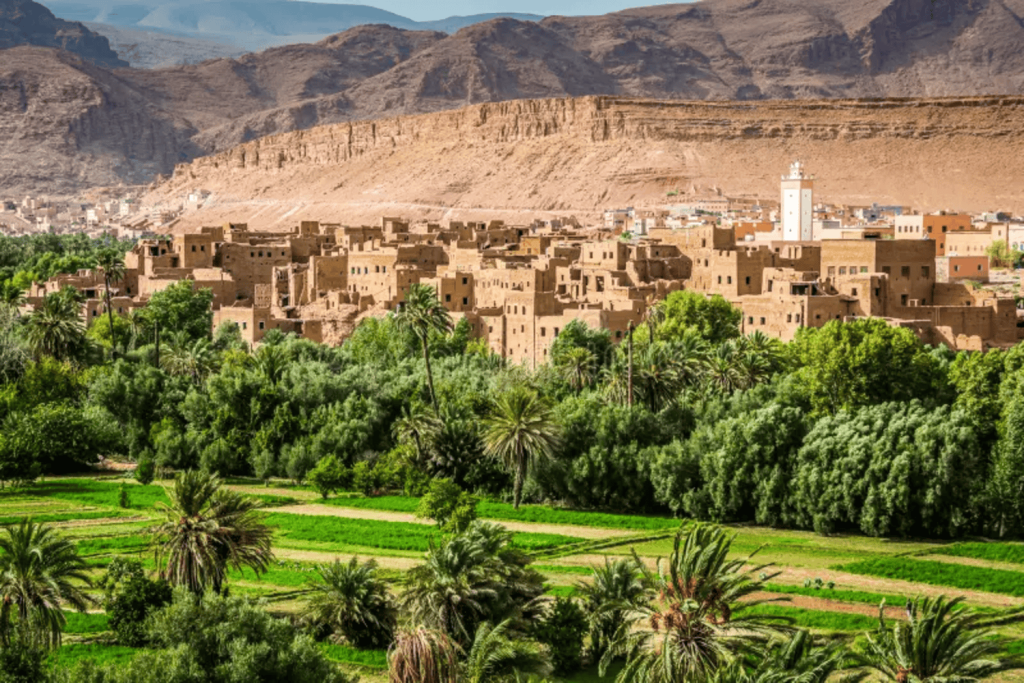
Tinghir offers a similar pace to the Oasis of Figuig. After a long bus ride, it feels like stepping into a place where time stretches out again, with a peaceful atmosphere floating around naturally.
When I arrived there, I didn’t have strong expectations. But the simplicity of the surroundings quickly made my travel experience memorable, not because of major attractions, but because of how everything felt grounded and real.
Also located near an oasis with palm groves stretching around, Tinghir offers an authentic Moroccan lifestyle. Plus, the nearby Todra Gorges are a highlight to see when visiting Morocco. Its towering cliffs and water running down the river offer a memorable vision in a slightly more accessible environment than Figuig.
Distance from Figuig by Car: 6-7 hours, 500 kilometres
Distance from Figuig by Bus: 10-12 hours, 200-250 MAD
Tinghir offers a similar pace to the Oasis of Figuig. After a long bus ride, it feels like stepping into a place where time stretches out again, with a peaceful atmosphere floating around naturally.
When I arrived there, I didn’t have strong expectations. But the simplicity of the surroundings quickly made my travel experience memorable, not because of major attractions, but because of how everything felt grounded and real.
Also located near an oasis with palm groves stretching around, Tinghir offers an authentic Moroccan lifestyle. Plus, the nearby Todra Gorges are a highlight to see when visiting Morocco.
Its towering cliffs and water running down the river offer a memorable vision in a slightly more accessible environment than Figuig.
Distance from Figuig by Car: 6-7 hours, 500 kilometres
Distance from Figuig by Bus: 10-12 hours, 200-250 MAD
Ouarzazate
Once not planned on my itinerary across Morocco, I stumbled upon Ouarzazate for what was initially a stopover for the night. But after 24 hours there, I decided to extend my stay as the city captured my heart somehow.
There is something different about Ouarzazate. Being located at the desert gate, it is for most travellers a way to trek on sand dunes, but they miss a hidden gem by not exploring what Ouarzazate has to offer.
Far away from the buzz and hustle of big cities, Ouarzazate is perfect for diving into Moroccan traditions and culture. Over there, you can learn how to cook couscous from scratch, explore hidden Oasis and villages, or witness Amazigh traditions in traditional architecture. Curious? Read the dedicated post about Ouarzazate below!
👉 Discover why you should visit Ouarzazate and its hidden gems here
Distance from Figuig by Car: 9-10 hours, 680 kilometres
Distance from Figuig by Bus: 14-16 hours, 300 MAD
Once not planned on my itinerary across Morocco, I stumbled upon Ouarzazate for what was initially a stopover for the night. But after 24 hours there, I decided to extend my stay as the city captured my heart somehow.
There is something different about Ouarzazate. Being located at the desert gate, it is for most travellers a way to trek on sand dunes, but they miss a hidden gem by not exploring what Ouarzazate has to offer.
Far away from the buzz and hustle of big cities, Ouarzazate is perfect for diving into Moroccan traditions and culture. Over there, you can learn how to cook couscous from scratch, explore hidden Oasis and villages, or witness Amazigh traditions in traditional architecture.
Curious? Read the dedicated post about Ouarzazate below!
👉 Discover why you should visit Ouarzazate and its hidden gems here
Distance from Figuig by Car: 9-10 hours, 680 kilometres
Distance from Figuig by Bus: 14-16 hours, 300 MAD
Figuig in Morocco - FAQs
What is Figuig in Morocco?
Figuig is a remote oasis town in northeastern Morocco, located near the Algerian border. Known for its vast palm grove, traditional ksour (fortified berber villages), and rich cultural heritage, Figuig offers an authentic slow travel experience far from mass tourism.
Figuig is a remote oasis town in northeastern Morocco, located near the Algerian border. Known for its vast palm grove, traditional ksour (fortified berber villages), and rich cultural heritage, Figuig offers an authentic slow travel experience far from mass tourism.
Where is Figuig located in Morocco?
Figuig is located in eastern Morocco, close to the Algerian border and at the edge of the Sahara Desert. Its isolated location makes it one of the most off-the-beaten-path destinations in the country.
Figuig is located in eastern Morocco, close to the Algerian border and at the edge of the Sahara Desert. Its isolated location makes it one of the most off-the-beaten-path destinations in the country.
Is Figuig worth visiting?
Yes, Figuig is worth visiting for travellers seeking authenticity, cultural immersion, and slow travel experiences. Unlike popular Moroccan cities, it offers a peaceful atmosphere, a traditional lifestyle, and unique desert landscapes.
Yes, Figuig is worth visiting for travellers seeking authenticity, cultural immersion, and slow travel experiences. Unlike popular Moroccan cities, it offers a peaceful atmosphere, a traditional lifestyle, and unique desert landscapes.
Is Figuig safe for travellers?
Yes, Figuig is considered a very safe destination. The local population is welcoming and peaceful, with a strong sense of community, especially in neighbourhoods like Zenaga. Solo travellers can explore the area with confidence.
Yes, Figuig is considered a very safe destination. The local population is welcoming and peaceful, with a strong sense of community, especially in neighbourhoods like Zenaga. Solo travellers can explore the area with confidence.
What languages are spoken in Figuig?
People in Figuig mainly speak Berber and Arabic. French is also widely understood, while English is rarely spoken. Learning a few basic French or Arabic phrases can greatly improve interactions with locals.
People in Figuig mainly speak Berber and Arabic. French is also widely understood, while English is rarely spoken. Learning a few basic French or Arabic phrases can greatly improve interactions with locals.
What are the main things to do in Figuig?
The main things to do in Figuig include exploring historical ksour such as Qsr aljwabr and Qsr awlad mhrz, walking through the palm grove, visiting public baths, hiking nearby plateaus, and connecting with locals to learn about traditional life.
The main things to do in Figuig include exploring historical ksour such as Qsr aljwabr and Qsr awlad mhrz, walking through the palm grove, visiting public baths, hiking nearby plateaus, and connecting with locals to learn about traditional life.
How do you get around Figuig?
Figuig is a small oasis town that can easily be explored on foot. Most attractions, palm groves, and neighbourhoods are accessible without transport, making it ideal for slow travel.
Figuig is a small oasis town that can easily be explored on foot. Most attractions, palm groves, and neighbourhoods are accessible without transport, making it ideal for slow travel.
How many days should you spend in Figuig?
Spending 2 to 3 days in Figuig is ideal. This gives enough time to explore the oasis, visit historical sites, and experience the local culture without rushing.
Spending 2 to 3 days in Figuig is ideal. This gives enough time to explore the oasis, visit historical sites, and experience the local culture without rushing.
When is the best time to visit Figuig?
The best time to visit Figuig is from October to April, when temperatures are cooler and more comfortable for exploring. The summer months can be extremely hot due to its proximity to the Sahara Desert.
The best time to visit Figuig is from October to April, when temperatures are cooler and more comfortable for exploring. The summer months can be extremely hot due to its proximity to the Sahara Desert.
Is Figuig expensive to visit?
Figuig is a very affordable destination. Accommodation, food, and daily expenses are low because prices are designed for locals rather than tourists. Budget per person per day in Figuig ranges from 25 to 60 euros.
Figuig is a very affordable destination. Accommodation, food, and daily expenses are low because prices are designed for locals rather than tourists. Budget per person per day in Figuig ranges from 25 to 60 euros.
What makes Figuig unique in Morocco?
Figuig stands out for its isolation, preserved traditions, and massive palm grove supported by ancient irrigation systems. It offers a rare glimpse into authentic Moroccan life untouched by mass tourism.
Figuig stands out for its isolation, preserved traditions, and massive palm grove supported by ancient irrigation systems. It offers a rare glimpse into authentic Moroccan life untouched by mass tourism.

Final Thoughts to Enjoy Figuig
You now have a glimpse into the hidden gem of Figuig in Morocco. Over there, traditions stay alive, stories are shared, and landscapes captivate the soul. This traditional Moroccan village calls slow travellers to step off the beaten path and immerse themselves in its unique charm.
Once in the Figuig oasis, wander around the countless date palms field, get to know the inhabitants of the Figuig province, their history, and you will create unforgettable memories. I hope this remote village will capture your heart as it does to me.
What’s next on your journey in Morocco? If you are eager to discover more off-the-beaten-path destinations in Morocco, dive deeper into the culture, and get inspired for your next adventure, venture into one of these unique travel itineraries in Morocco.
Many places await you to be discovered and explored such as the village of Tamraght on the Atlantic Coast or the cosmopolitan Tangier and its best things to do. However, the destination doesn’t matter; only the connections and memories made along the way.
Bon voyage!
Wander with Purpose – Connect with Heart.
You now have a glimpse into the hidden gem of Figuig in Morocco. Over there, traditions stay alive, stories are shared, and landscapes captivate the soul.
This traditional Moroccan village calls slow travellers to step off the beaten path and immerse themselves in its unique charm.
Once in the Figuig oasis, wander around the countless date palms field, get to know the inhabitants of the Figuig province, their history, and you will create unforgettable memories. I hope this remote village will capture your heart as it does to me.
What’s next on your journey in Morocco? If you are eager to discover more off-the-beaten-path destinations in Morocco, dive deeper into the culture, and get inspired for your next adventure, venture into one of these unique travel itineraries in Morocco.
Many places await you to be discovered and explored such as the village of Tamraght on the Atlantic Coast or the cosmopolitan Tangier and its best things to do. However, the destination doesn’t matter; only the connections and memories made along the way.
Bon voyage!
Wander with Purpose – Connect with Heart.


